July ‘26 Snippets
I have long loved to read. But recently, it seems my time for reading has only increased. From mid-August to late May, my daughter is away at school all day. Without a young child at home, the house stays in good order fairly easily. And, try as I might, I haven't found another hobby to pursue long-term. I've tried quilting, knitting, sewing, baking, painting, drawing, and more. But I always come back to reading.
I've also found that my retention of what I read deepens when I talk—or write—about it. Additionally, I genuinely enjoy seeing what others are reading too, gathering recommendations along the way. So I thought I would begin a series about the books accompanying me through each month.
At the end of each year, I'll still share my list of favorite books. (You can find that series here.) But these new posts are something different. Rather than holding a ranking of favorites, they're a collection of the snippets that linger with me—the passages, ideas, observations, and insights I most want to remember from my reading that month.
My hope is to publish one of these posts each month, though I suspect life will, at times, interrupt those plans. More than anything, I hope this series becomes a kind of treasury: a record of what I've been gleaning and learning through my favorite hobby by far.
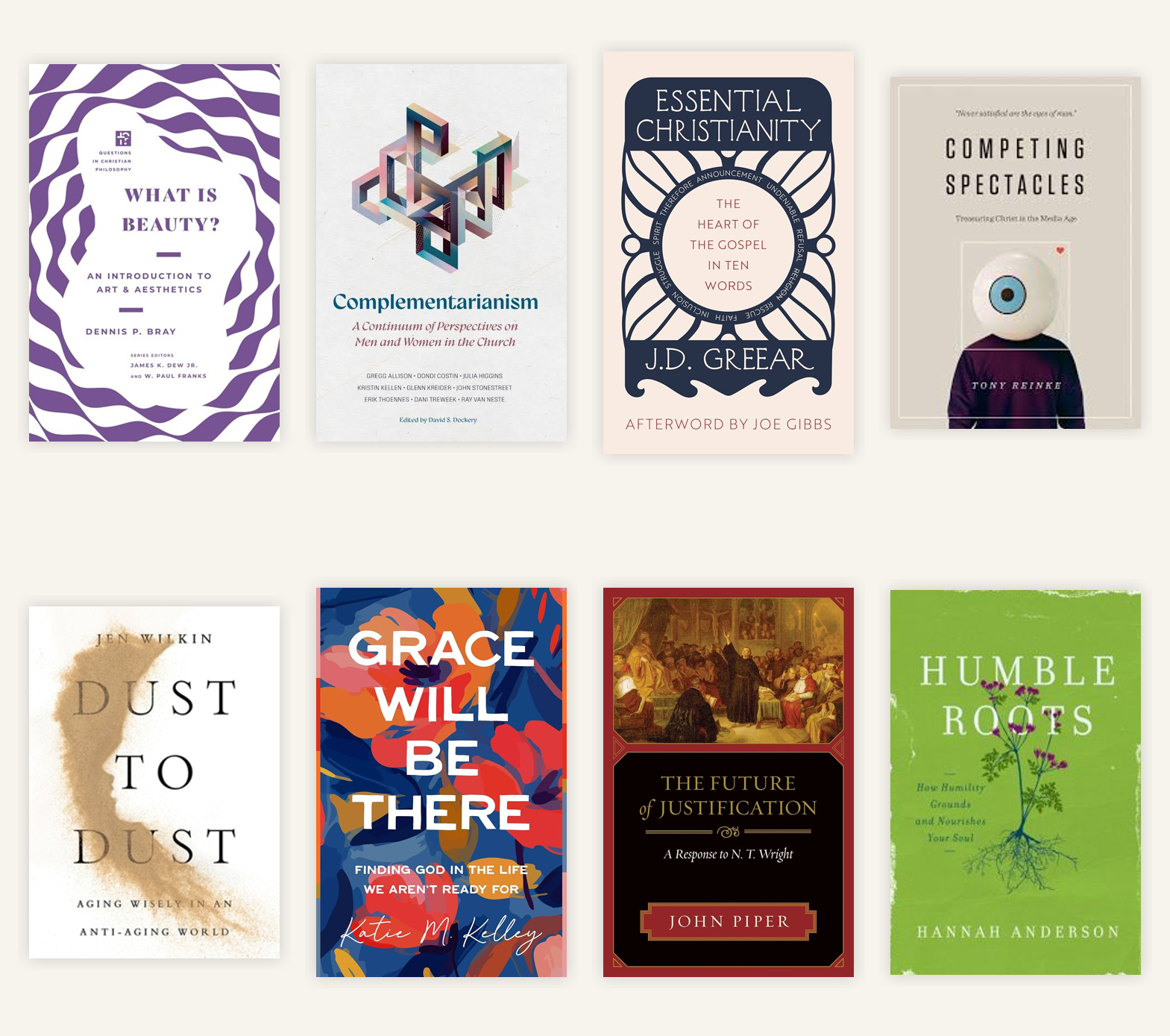
This month, I have snippets from eight books. These aren't all the books I read—for everything, you can follow me on Goodreads here. But these are the reads that lingered with me most, along with the snippets I most want to preserve.
1. What Is Beauty?
I loved reading about the philosophy of beauty, aesthetics, art, the artist, and more. Of everything I encountered in this book, the idea I most want to carry with me is the cluster theory of defining art. Rather than attempting to force every work into a rigid philosophical definition, it understands art as "too varied, too tied to human ingenuity and imagination to ever be contained by a rigid philosophical definition... In short, the cluster theory says that an artwork is a collection of artistic characteristics."
Some of those characteristics listed in the book include that a work:
possesses aesthetic qualities such as beauty, grace, or elegance;
expresses emotion;
is intellectually challenging;
is formally complex and coherent;
conveys complex meaning;
exhibits an individual point of view;
is original and an exercise of creative imagination;
is the product of a high degree of skill;
elicits powerful emotions in the beholder; and
is intended to be art.
A work does not need to possess every one of these characteristics in order to be considered art. I found this way of thinking profound and immensely helpful. It has given me a new framework for considering works of art—not asking whether they fit one narrow definition, but appreciating the many different qualities that make them what they are.
2. Complementarianism
I was moderately helped and informed by the various perspectives represented in this volume. What interested me most, however, was Greg Allison's opening essay. He writes thoughtfully about men and women, arguing that all character qualities may be found in both men and women (including courage and nurturing, for example). He also contends that all spiritual gifts may be given to both men and women. I found both of those conclusions in his earlier book, Complementarity.
What I don't remember finding in Complementarity, however, was an explanation of what the differences between men and women might actually look like in practice. He includes one here:
“While the assessment of what constitutes ‘fitting expressions’ of maleness and femaleness may be notoriously difficult to specify, Jacob Percy and Torey Teer offer four criteria, rendered as questions:
does the expression intend to honor God and promote human flourishing?
does it obey all time-, place-, and culture-transcending Scriptural commands?
does it intend to respectfully reflect one’s actual sex rather than confusingly convey one’s opposite sex? and
is it sensitive to the norms and values of the culture in which it resides?”
When have you heard a better explanation? I haven't.
3. Essential Christianity
In past years especially, I went through a long season of questioning my salvation. One day after church, following another period of reflection (and worry), I felt that the Lord brought a picture to mind. It was similar to an illustration I had heard before, but this expression of it was new to me.
I pictured a vast chasm opening below, with cliffs on either side. Spanning the gap was a net. Christ and His righteousness were the net. That day, not only in my imagination but in my spirit, I sat down on that net and trusted it—trusted Christ. It has become the picture I return to again and again, and I haven't seriously questioned my salvation since.
So imagine my joy when J. D. Greear describes faith as taking a seat: “Faith does not take a quick seat in the chair and pop back up. Faith takes a seat in the chair and remains.” He goes on to explain that all believers will get up from time to time, but a true believer always sits back down again.
I found this picture of faith remarkably similar to the one the Lord impressed on my own heart. It also helped explain why I return to my net so often. Whenever fears arise, I simply picture myself sitting back down again—resting once more in Christ and His righteousness.
4. Competing Spectacles
Tony Reinke made me think more carefully about what I place before my eyes. He also introduced the intriguing possibility that the "spectacle" of the cross may become so vivid in our minds that it is almost as though we had seen it ourselves.
I appreciated that Reinke leaves room for different Christian convictions regarding visual media. Some believers may choose to abstain from television and movies altogether, and there is value in that witness for the rest of us. At the same time, he acknowledges that not every Christian will come to the same conclusion.
One verse he highlighted especially stayed with me: “I will not set before my eyes anything that is worthless” (Psalm 101:3). It prompted me to ask a simple but searching question: What am I receiving from this show or spectacle before my eyes?
While Reinke focuses primarily on what endless hours of television can take from us—especially the passive, almost coma-like state it can produce—I found myself also considering what certain television and films can give us. That became one of the most thought-provoking takeaways of the book for me.
All in all, it was a fascinating and intellectually stimulating read.
5. Dust to Dust
“Maturity means setting our minds on things above, acknowledging the deepening lines in our faces, and recalling the words of David: ‘The lines have fallen for me in pleasant places; indeed, I have a beautiful inheritance’ (Ps. 16:6).”
“Outward decline yields inward growth of spiritual and resurrection hope. To age is to deepen.”
Much of this book focused on seasons of life I am not presently in. I am not in the latter years of life, nor am I caring for aging parents. Even so, reflecting on these stages proved to be a rich experience. For example, Wilkin shares how she learned to collaborate with her aging parents while showing them deep honor and respect.
Especially poignant was the personal list of “I wish” statements she offers as she reflects on numbering her days. Those reflections rang true as she considered the brevity of life and the lasting impact of our choices regarding family, youth, aging, and ultimately living for the glory of God. They encouraged me to live each day more wisely and welcome the reality of aging.
6. Grace Will Be There
This collection of essays reflects on the author's experiences with raising a child with autism, adoption, divorce, and other difficult and poignant seasons through which she came to know God more deeply.
What I most want to remember from this book is that God often meets us in the particulars of our suffering. The author recounts the ways the church, family, and friends cared for her during times of need, bringing tears to my eyes because I, too, have experienced God's kindness through His people.
God has not promised us a particular list of earthly provisions. Yet, in His grace, He so often supplies such things anyway. This book reminded me to notice those gifts once again, to ponder them, and to thank Him for them once more.
These essays left an imprint on my soul.
7. The Future of Justification
What to say about this book on the New Perspective on Paul? I took quite a few notes and made many highlights, and I won't attempt to recount them all here. Piper does an excellent job of taking the reader directly to N. T. Wright's own words, while also acknowledging that Wright can be difficult to decipher fully at times.
My main takeaways were these:
Wright does not view righteousness as God's commitment to do what is right. Instead, he understands it as God's covenant faithfulness. He also rejects the doctrine of the imputed righteousness of Christ as understood by the Reformers—that Christ's moral righteousness is credited to my "account." On both of these points, I disagree with Wright and am grateful to Piper for carefully guiding readers through the discussion.
Wright does affirm the virgin birth, the incarnation, and the substitutionary atonement. For such common ground, I am thankful.
For quite some time, I had D. A. Carson's response to the New Perspective on my "one day" reading list, wondering how much of it I could make my way through. I'm grateful my mother pointed me to this volume instead. It helped me accomplish a years-long reading goal by taking a different route.
8. Humble Roots
This book was a journey—rewarding, fruitful, and memorable.
I appreciated how the author could weave plants so seamlessly into discussions of humility. I will take away her emphasis on God being greater than our hearts—a refrain she returned to often in the chapter on our emotional lives.
I will remember the blackberries, and how it’s cheating to gather the sweet fruit without enduring the thorns. I will remember the root rot that plagued vineyards and the necessity of grafting vines onto rootstock resistant to the insects that caused the disease—a beautiful picture of our being grafted into the family of God.
I will remember the apple trees: the countless varieties that have effectively disappeared from our food system, and Jesus—the “lost variety” of humanity—coming forth from the stump of Jesse.
And I will remember the plight of the tomato, which must be allowed to ripen naturally in order to become the rich, flavorful fruit it was created to be, even though doing so leaves it vulnerable to disease, to being eaten, or to falling before it is harvested. The risks are worth the reward; in fact, they are necessary to it.
Finally, I will remember the humility of being buried in death—and the daily reminder of that burial each night as we surrender ourselves to sleep, trusting God to sustain us until morning.
Safe to say, I appreciated Anderson’s work here. I’m grateful that when money and resources were scarce, she chose to do what she could with what she had, determined to learn to be a writer.
For now, I'm closing my reading notebook—but only until next month. Check back then for more snippets.
A note about AI: I used AI to generate the images in this post and as an editorial assistant for the writing. The ideas, opinions, and conclusions are my own. I carefully review every suggested edit, accepting only those that faithfully reflect my intended meaning and voice. Having worked with a number of human editors over the years, I also seek to keep AI's editorial role within the same bounds as thoughtful human editing—not to change what I think, but to help me express it more clearly.