Reading Report: God, Technology, and the Christian Life
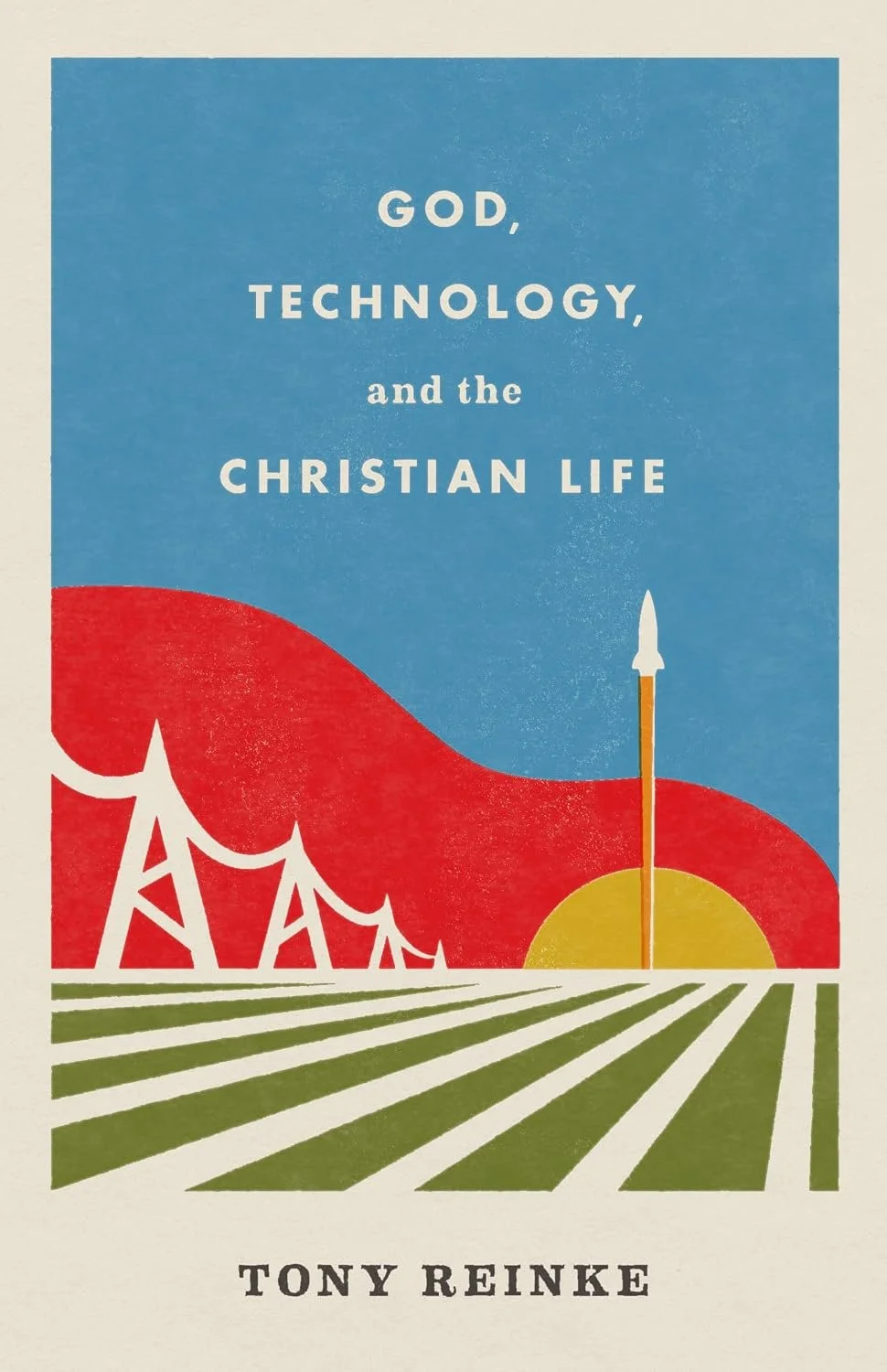
God, Technology, and the Christian Life, by Tony Reinke
⭐️⭐️⭐️⭐️⭐️
Would I re-read?
Yes, I would.
Why I Like the Book
Reinke uses Isaiah 54:16–17 to teach God’s sovereignty over all of technology and technological advance (including, in Isaiah, a technology of the day: ancient weapon-making). Here is the passage:
Behold, I have created the smith
who blows the fire of coals
and produces a weapon for its purpose.
I have also created the ravager to destroy;
no weapon that is fashioned against you shall succeed,
and you shall refute every tongue that rises against you in judgment.
This is the heritage of the servants of the LORD
and their vindication from me, declares the LORD.
In chapter 2, Reinke makes the following observation based on this passage:
God makes three incredibly specific claims: (1) He creates the creators of weapons. (2) He creates the wielders of those weapons. (3) He governs the outcomes of those weaponized warriors—the ravagers.
Reinke goes on to write of God’s sovereignty:
God governs each creature toward good ends directly; and he governs over all sin and evil indirectly. He governs the lives and decisions of all his creatures to his wise end, a sovereign truth commonly called the doctrine of concurrence. God is the primary, but remote, cause of all human action. Humans are the secondary, but proximate (or near), causes of their own actions. Thus, even the scope of the ravager's destruction is sanctioned by God. He governs human technology and how those technologies are wielded, even destructive ones. He does all this by secondary causality.
While I have long loved the doctrine of God’s sovereignty, specifically considering God’s total sovereignty over technology and technological advance is very comforting. At times, with ethical considerations seemingly ignored, it seems that technological advance can fly in the face of God. So, I have thought about technology as separate from Him. But no, He is in control of all things—including all technology and even what displeases Him in its advance—according to Isaiah 54:16–17.
God, in His sovereignty, allows His world to advance in technology as a gift of common grace, even while not every use pleases Him. As Reinke writes, we see this common grace in Genesis, where Cain did not die as punishment for killing his brother Abel, but went on to found a city—a place we often associate with technological heights. Cain’s descendants birthed technological advances:
Genesis 4:20 — Jabal becomes “the father of those who dwell in tents and have livestock.”
Genesis 4:21 — Jubal becomes “the father of all those who play the lyre and pipe.”
Genesis 4:22 — Tubal-cain is described as “the forger of all instruments of bronze and iron.”
This progression of Cain’s line as developers of technology sets up a pattern that, often, the world, and not the Church, is at the forefront of scientific progress. Reinke traces the biblical theme of “city” from Cain’s to that of notorious Babylon, showing how technological advance can allure the human race away from the Lord.
The symbolic “city” of the world offers what Reinke calls the “Gospel of Technology”—where salvation is offered and promised through advances in scientific achievement, providing happiness and even tempting us with disrupting death or at least achieving longer life. But, as Reinke notes, the Scriptural “city”—of Babylon in the end times—will have a final face-off with God. The Lord will prevail.
All of the above is a Scriptural narrative that I have not previously heard in relation to scientific achievement; I appreciated thinking of the pathway technology has taken through the unfolding of God’s world.
My Biggest Takeaway
Continuing with the comforting theme of God’s sovereignty over technology, Reinke offers “nine tech limiters” at the end of his final chapter.
Creational limiter: The world’s resources are limited.
Vocational limiter: God gives and withholds people who advance technology.
Cross-cultural limiter: The presence of different countries and languages slows the adoption of technologies.
General-revelation limiter: Observing the impacts of technology on creation help us limit harmful technology.
Interruption limiter: God can directly thwart technological advance whenever He chooses.
Spiritual limiter: Special revelation (Scripture) gives believers wisdom about adoption of technologies.
Weakness limiter: God advances His gospel through the Church and the foolishness of the gospel; big tech does not have ultimate power.
Heart limiter: Technology can reveal the spiritual hunger in every person, which can only be satisfied in God.
Hard-stop limiter: Techno-idolatry will meet its final end on the day God appoints.
Because of God’s ultimate control, Reinke remains a “tech-optimist.” I likewise remain hopeful about the good technological advances can do for people and the world, while remaining wary of the ways they could be abused—abuses that God will ultimately judge.
Note Reinke’s related works: Competing Spectacles and 12 Ways Your Phone Is Changing You.